Apache Tears
The Black Mourner of Quiet Release
Also known as: Marekanite, Obsidianite
About the stone
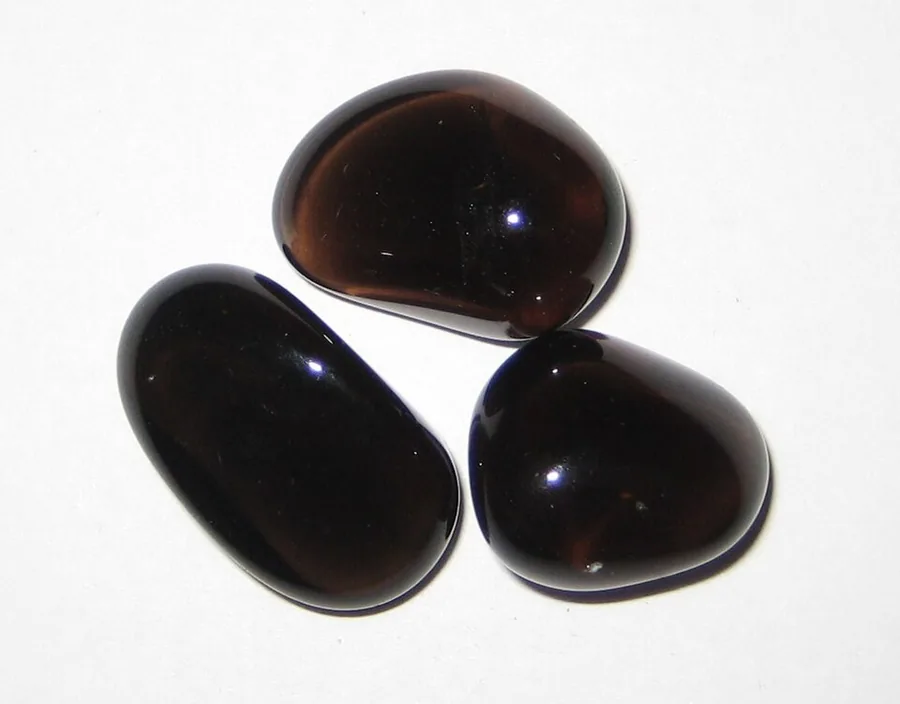
Apache tears are small, rounded nodules of dark obsidian—natural volcanic glass—that often look translucent brown when held to the light; they remain as unaltered cores when surrounding obsidian absorbs water and becomes perlite. No single discoverer or discovery date is reliably recorded, but they have a long history in the regional collecting and lapidary trade, particularly around Superior and Picketpost Mountain in Arizona, with additional occurrences in Nevada and New Mexico. Their name comes from a regional legend that mourning families’ tears turned to stone after Apache warriors leapt from a cliff rather than face capture; versions of the story differ, so it is presented as folklore rather than a verified historical account.
Mineral data
- Chemical composition: Apache Tears are rounded nodules of obsidian, a natural volcanic glass made mostly of silicon dioxide (SiO2) without a crystalline structure.
- Hardness: 5 to 5.5 on the Mohs scale.
- Color: Black to smoky brown; thin edges may glow translucent when held to light.
- Specific gravity: 2.33
- Refractive index: 1.4-1.6
Metaphysical data
Apache Tears, recognized for their grounding and protective character, have been utilized in metaphysical practices to ease grief and release trapped emotion.
Grounding and Protective Energy
- Apache Tears are associated with the root chakra and are believed to ground the body while transmuting negative energy into something more neutral.
- They are thought to defend against psychic attack and to help one sense approaching danger before it arrives.
Emotional Healing
- Apache Tears are often used to help one accept and release grief, honoring sorrow without being held hostage by it.
- They are believed to clear negative emotions that hold one back, and to bring a sense of hope even in dire circumstances.
Harmonizing Energy Centers
- Apache Tears are associated with the root chakra, and are thought to carry unneeded emotional weight downward and return it to the earth.
- Held during grounding meditation, they are believed to steady the base of the energy body so that healing can unfold.
Zodiac Associations
- Apache Tears are associated with the zodiac sign of Aries, a sign of courage that may draw on the stone's protective, forward-moving energy.
- They vibrate to the number 7, linked with introspection, and are thought to invite quiet reflection before change.
Spiritual Growth
- Apache Tears are believed to invite opportunities for positive change and to increase spontaneity, easing the fear of stepping into the unknown.
- Their folk story is a reminder of history and injustice, and many use the stone with respect for the people whose grief it recalls.
Physical Healing
- Apache Tears are not a substitute for professional medical advice, but they are traditionally believed to help move trapped emotions out of the body through the root chakra.
- This release is thought to allow the body to heal and to support overall wellness, alongside proper care.
Care and handling
As natural glass, Apache Tears are brittle: avoid knocks and drops, which can chip them into sharp edges. They can be cleaned with lukewarm water and a soft cloth and are safe to handle, but avoid sudden temperature changes and harsh chemicals.
Individual experiences with Apache Tears vary, and the stone is offered as a companion for reflection rather than a guarantee. Hold it with respect for its story, and let it support, never replace, grief counseling or medical care.