Lizardite
The Green Scales of the Serpentine Hills
Also known as: Serpentine, Serpentine Jade
About the stone
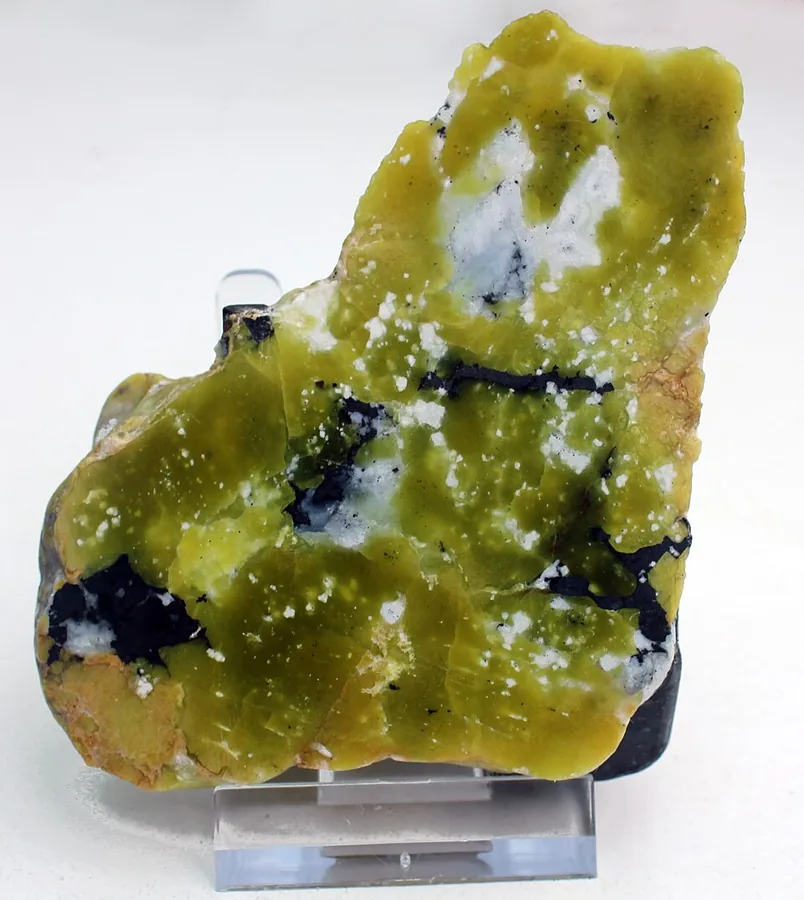
Lizardite is a usually pale-green, yellow-green, or white magnesium silicate mineral in the serpentine group, commonly formed when water alters magnesium-rich rocks. Material collected at Kennack Cove, Cornwall, in 1949 was studied in 1951, and Eric J. W. Whittaker and Jack Zussman formally named the mineral in 1955 after the Lizard Peninsula—not the reptile. It occurs worldwide, with notable localities in Britain, Italy, Japan, Australia, Canada, and Montana, USA. Historical synonyms include orthoantigorite and scyelite; broader commercial labels such as “serpentine,” “serpentine jade,” and “new jade” may include lizardite-bearing material but are not precise synonyms or genuine jade. Its lore largely derives from serpentine generally, traditionally associated with protection against snakebite and poison.
Mineral data
- Chemical composition: Lizardite is a member of the serpentine group of minerals, a hydrous magnesium silicate, Mg3Si2O5(OH)4. It is the most common serpentine mineral, forming fine-grained, flaky masses in altered rocks rich in magnesium.
- Hardness: About 2.5 on the Mohs scale, up to about 4 in compact pieces.
- Color: Green, olive, yellow-green, grey or white, often with a waxy or greasy luster.
Metaphysical data
Lizardite, recognized for its soft green serpentine colors, has been utilized in metaphysical practices to encourage renewal, shedding of the old and gentle kundalini-like awakening.
Grounding and Renewing Energy
- Lizardite is believed to carry the earthy, shedding energy of the serpentine family, much like a snake leaving an old skin behind.
- It is said to offer a steady, living presence for those who are growing and outgrowing old habits.
Emotional Healing
- The stone is thought to ease fear of change, encouraging patience as old patterns fade and new ones take shape.
- It is often used by those who feel stuck, as a gentle reminder that renewal can come quietly and without force.
Harmonizing Energy Centers
- Lizardite is generally associated with the heart chakra for its green color, and with the root chakra for its earthy nature.
- Held in meditation, it is said to link a grounded body with a soft, open heart.
Zodiac Associations
- Lizardite is not strongly tied to any particular zodiac sign, and is a welcoming companion for people of every sign.
- Its serpentine energy is sometimes linked with Scorpio's themes of transformation, though this is a matter of personal intuition.
Spiritual Growth
- Lizardite is often used as a meditation companion for contemplating transformation, cycles and the patient work of renewal.
- Its snake-skin-like green tones are seen by many as a symbol of wisdom, healing and shedding what is no longer needed.
Physical Healing
- Lizardite is traditionally associated with a feeling of gentle renewal, though it is not a substitute for professional medical advice.
- Anyone with health concerns should consult a qualified health professional, using the stone only as a quiet, comforting companion.
Care and handling
Lizardite is a soft serpentine and scratches and chips easily. Clean it with a soft, slightly damp cloth, dry it well, and avoid acids, harsh cleaners and ultrasonic cleaners. Serpentine rocks can sometimes contain asbestos-type fibers, so never grind, sand or carve it and avoid breathing any dust. Wash your hands after handling it, do not use it in gem water or elixirs, and keep it away from children and pets.
Individual experiences with Lizardite vary and are personal. Use it gently and safely, and let its serpentine green invite you to shed what no longer fits.