Red and Orange Aventurine
The Warm Glitter of Steady Hearts
Also known as: Strawberry Quartz, Tanzeberry Quartz
About the stone
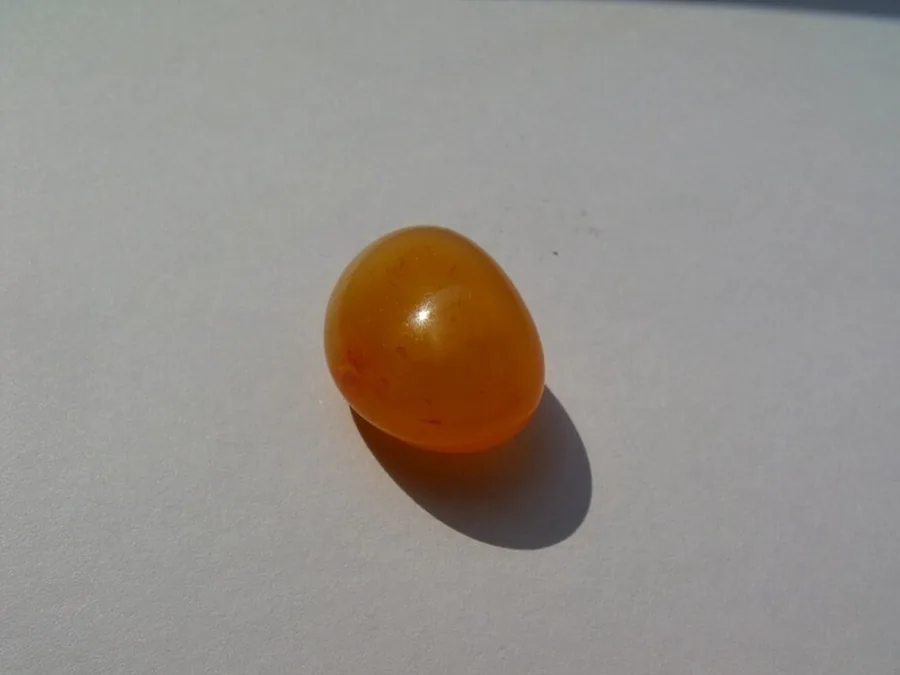
Red and orange aventurine are warm-colored varieties of quartz or quartzite containing hematite and/or goethite inclusions, which create their rusty-red to peach-orange hues and characteristic sparkle, called aventurescence. Neither color has a single documented discoverer or discovery date; the name “aventurine” was borrowed from seventeenth-century Venetian glittering glass, deriving from the Italian a ventura, meaning “by chance.” Reddish material is reported from Brazil, while orange aventurine occurs in Chile, Spain, and Russia, among other sources. Descriptive labels include “aventurine quartz,” “red aventurine,” “orange aventurine,” and “peach aventurine” for paler material; despite the shared naming history, these natural stones are not the manufactured glass called “goldstone.” Modern crystal lore broadly associates aventurine with luck, prosperity, and calm.
Mineral data
- Chemical composition: Red and orange aventurine are quartz (silicon dioxide, SiO2) with hexagonal structure, colored by hematite, goethite or similar mineral inclusions that create a shimmering glitter.
- Hardness: About 7 on the Mohs scale.
- Color: Red to orange, translucent to nearly opaque, with a metallic shimmer.
- Specific gravity: 2.64-2.69
- Refractive index: 1.544-1.553
Metaphysical data
Red and Orange Aventurine, recognized for their warm color and sparkle, have been utilized in metaphysical practices to calm anger, support empathy and steady the emotions.
Grounding and Calming Energy
- Red and orange aventurine are associated with the root and sacral chakras, and are believed to ground and warm the body.
- They allow one to find the space to calm when feeling angry or triggered, offering a pause before reacting.
Emotional Healing
- These stones promote emotional stability and emotional healing work, helping a person feel safe enough to face difficult feelings.
- They are believed to aid interpersonal relationships by holding space for empathy, softening conflicts and misunderstandings.
Harmonizing Energy Centers
- Red and orange aventurine are associated with the root and sacral chakras, the centers of survival, vitality and creativity.
- Held low on the body, they are thought to awaken a steady, grounded flow of warm, creative energy.
Zodiac Associations
- These stones are associated with the zodiac signs of Sagittarius and Aries, fiery signs that may enjoy their lively, optimistic warmth.
- They vibrate to the numbers 3 (red aventurine) and 9 (orange aventurine), linked with creativity and compassionate completion.
Spiritual Growth
- These stones are said to assist with written work, computer skills and hyperactivity in children, supporting focus on practical tasks.
- They are often used to bring a gentle protective feeling, including protection from electronic and environmental radiation.
Physical Healing
- These stones are not a substitute for professional medical advice, but they are traditionally believed to aid the healing of skin concerns such as eczema, rosacea, acne and psoriasis.
- They are also said to protect against radiation and the effects of chemotherapy, a claim best treated as symbolic and never as medical protection.
Care and handling
Red and orange aventurine are hard and durable, and can be cleaned with lukewarm water, mild soap and a soft cloth. Very bright specimens may be dyed, so avoid soaking and harsh chemicals. Avoid sudden temperature changes and strong prolonged sunlight, which may fade some stones.
Individual experiences with Red and Orange Aventurine vary, and their effects are personal rather than guaranteed. Use them mindfully as warm companions, and never in place of medical treatment or radiation safety measures.