Malacolla
The Green and Cyan Heart Weaver
Also known as: Malachite & Chrysocolla
About the stone
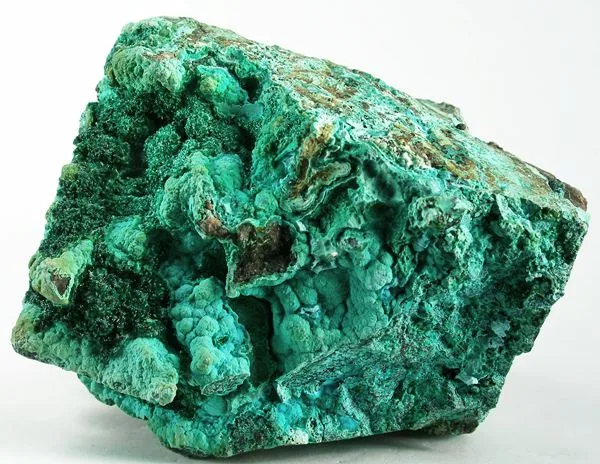
Malacolla is a modern trade name for a natural combination of green malachite and blue to turquoise chrysocolla, formed together in the oxidized zones of copper deposits; it is not a separate mineral species. Its name blends those of its two components, and although both have long histories of human use, malacolla has no independently documented ancient history, single discovery date, or discoverer. Also sold descriptively as chrysocolla–malachite or malachite–chrysocolla, it comes from copper-mining regions including Peru, the Democratic Republic of Congo, and Arizona, USA; it should not be confused with azurmalachite, which contains azurite rather than chrysocolla. Modern crystal lore combines malachite’s associations with protection and transformation with chrysocolla’s symbolism of calm, compassion, and communication.
Mineral data
- Chemical composition: Malacolla is a natural combination of two copper minerals: malachite, a copper carbonate hydroxide with the formula Cu2CO3(OH)2, and chrysocolla, a hydrated copper phyllosilicate whose composition varies.
- Hardness: Roughly 2 to 4 on the Mohs scale, because malachite is about 3.5 to 4 and chrysocolla is softer and varies.
- Color: Deep green banded with bright cyan, blue-green and turquoise tones.
Metaphysical data
Malacolla, recognized for its blend of green and cyan heart-centered energies, has been used in metaphysical practices to encourage compassionate communication, emotional release and a feeling of safety in one's own company.
Grounding and Stabilizing Energy
- Malacolla is believed to soothe the urge to run from difficult feelings, calming the flight response so one can stay present and steady when life becomes overwhelming.
- Its soothing green and cyan tones are thought to refresh one's outlook, offering a stable place from which to look at old situations in a new and more hopeful way.
Emotional Healing
- This stone is traditionally said to heal heartbreak and soften cold intellectualism with love and compassion, helping the mind and heart speak to each other again.
- It is often used to dissolve egocentric habits and to support those who struggle with people pleasing or codependent patterns, making it easier to feel secure when alone, secluded or single.
Harmonizing Energy Centers
- Malacolla is associated with the heart and throat chakras, and is thought to link feeling with speech so that words can rise from the heart with clarity.
- By joining these two centers, it is believed to promote honest communication that follows one's highest truths and carries kindness along with it.
Zodiac Associations
- Malacolla is linked with Scorpio, Sagittarius, Taurus, Gemini, Virgo and Capricorn, so many people may feel drawn to it for emotional depth and honest expression.
- It is said to vibrate to the number 7, a number connected with reflection, inner study and the quiet search for meaning beneath the surface of events.
Spiritual Growth
- Malacolla is believed to encourage communication from the heart, helping one speak and live in line with their highest truths rather than with what others expect.
- Many people use it in meditation to release old emotional weight, trusting that feelings once honored and expressed can pass through rather than settle in the body.
Physical Healing
- Malacolla is not a substitute for professional medical advice; some traditions say it helps the body recover from trauma and shock when used alongside proper care.
- It is thought to help release emotions that have been held in the body so that they do not harden into dis-ease, supporting a gentler sense of relief.
Care and handling
Malachite contains copper and is toxic if swallowed or inhaled as dust, and chrysocolla is also a copper mineral, so treat Malacolla with caution. Wash your hands after handling, never grind, sand or cut it without proper protection, and never use it in water, in an elixir or near the mouth. Keep it away from children and pets. Both minerals are soft and easily scratched, and malachite can react with acids, so keep it dry, avoid soaking and harsh cleaners, and wipe it gently with a soft dry cloth. Polished pieces are often sealed with wax or resin, which heat can damage.
Individual experiences with Malacolla vary, and its effects are personal rather than guaranteed. Handle it with care, keep it safely out of water, and let it be a thoughtful companion for honest feeling and clear, heartfelt speech.