Cordierite
The Violet-Blue Pathfinder
Also known as: Viking's Compass, Iolite, Dichroite
About the stone
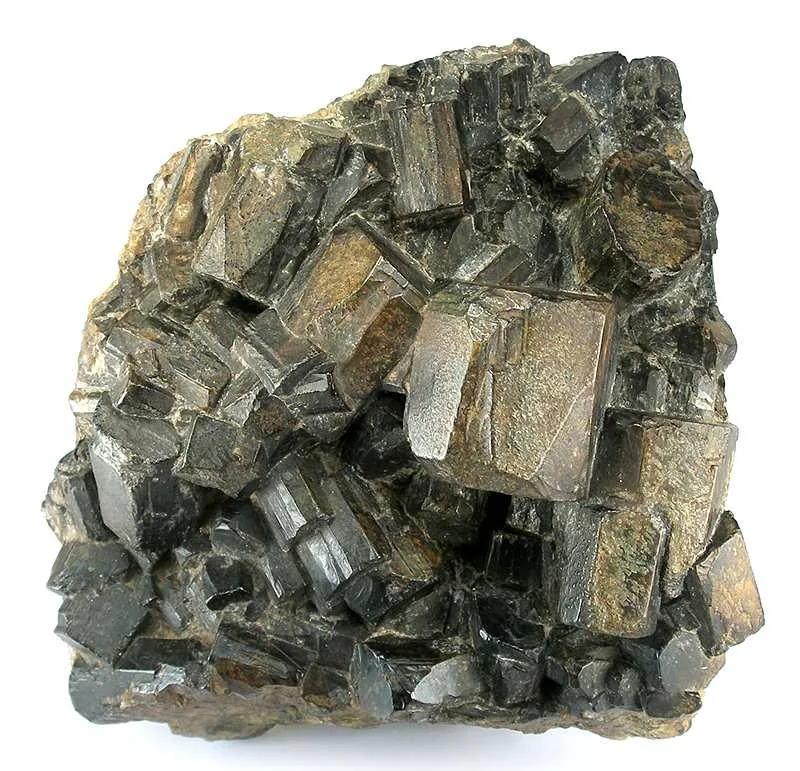
Cordierite is a magnesium–aluminum silicate mineral best known in its transparent blue-violet gem form as iolite; other historical names include dichroite and “water sapphire,” although it is not sapphire. Louis Cordier described it as dichroite in 1809, and mineralogist J. A. H. Lucas renamed it cordierite in his honor in 1813, marking its scientific classification rather than humanity’s first encounter with the stone. Important sources include India, Sri Lanka, Madagascar, Brazil, Myanmar, and Tanzania; its striking pleochroism makes it appear different colors when viewed from different directions. Its nickname “Vikings’ compass” comes from the popular theory that Norse sailors used it to locate the sun through polarized skylight, but this remains an unconfirmed historical association rather than an established discovery.
Mineral data
- Chemical composition: Cordierite is a magnesium iron aluminum cyclosilicate mineral with the approximate formula Mg2Al4Si5O18, with iron replacing some magnesium; its gem variety is known as iolite.
- Hardness: 7 to 7.5 on the Mohs scale.
- Color: Blue to violet-blue, sometimes gray or yellowish, with strong pleochroism (different colors from different angles).
Metaphysical data
Cordierite, recognized for its shifting blue-violet colors, has been utilized in metaphysical practices to support intuition, vision and a clear sense of direction.
Grounding and Stabilizing Energy
- Cordierite is believed to help one feel oriented and clear about their direction, in keeping with its legend as a navigator's stone.
- It is thought to steady the mind when many options are present, helping one choose a path with calm confidence.
Emotional Healing
- Its deep blue-violet color is often linked with calm, reflection and inner peace.
- It is thought to ease feelings of confusion or indecision, replacing them with a steady sense of knowing what matters.
Harmonizing Energy Centers
- Cordierite is often linked with the third eye chakra, the center of intuition, imagination and inner vision.
- Resting it on the brow during meditation is thought to focus the attention and sharpen insight.
Zodiac Associations
- Cordierite is not strongly tied to one particular zodiac sign, and its thoughtful energy suits anyone who wants clearer vision.
- Air and water signs such as Libra, Pisces and Sagittarius may feel an affinity for its seeking, intuitive quality.
Spiritual Growth
- Because it shows different colors from different angles, it is used as a symbol for seeing a situation from more than one perspective.
- In meditation it is used to cultivate vision, imagination and trust in one's inner compass.
Physical Healing
- This information is for general interest and is not a substitute for professional medical advice, and the stone does not treat any condition.
- In crystal lore it is simply valued as a calming companion for times of mental strain, such as study or planning.
Care and handling
Cordierite is fairly hard, 7 to 7.5 on the Mohs scale, but it has cleavage and can chip or split if struck. Clean it with mild soap, lukewarm water and a soft cloth, and dry it well. Avoid ultrasonic and steam cleaners if it has fractures, harsh chemicals and sudden temperature changes. Store it padded away from harder gems.
Individual experiences with Cordierite vary, and its effects are personal. Hold it mindfully, turn it in the light to see its colors shift, and let it help you look at your path from every side.